
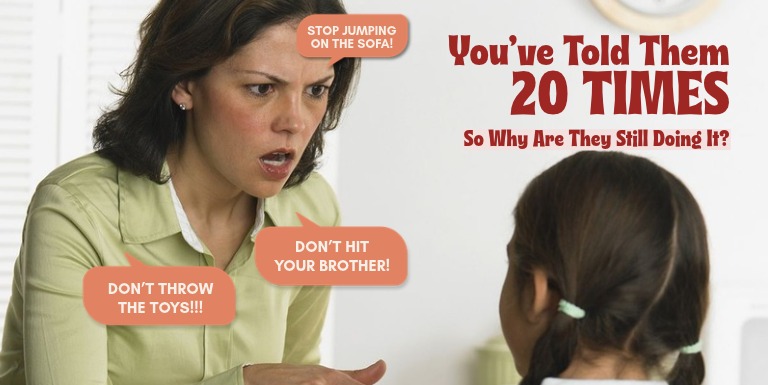
You’ve Told Them 20 Times. So Why Are They Still Doing It?
“Don’t throw the toys!”
“Stop jumping on the sofa!”
“Don’t hit your brother!”
Have you ever repeated the same instructions again and again, only to watch your child do exactly the same thing moments later?
Eventually, your voice gets louder. You start wondering, “You already know this. Why do I have to keep saying it?”
If this sounds familiar, you're not alone. Repeating yourself can be exhausting, especially when you're tired, rushing to get things done or managing more than one child.
But here's an important distinction that can change how we respond to our children: knowing a rule is not the same as being able to follow it consistently.
In this article, Dr Kexin Ng, Paediatrician, Certified Paediatric Sleep Consultant and Certified Jai Parenting Coach, explains why children repeat behaviours even when they know the rules—and how parents can respond with clear boundaries, practical guidance and calmer follow-through.
Why Does My Child Keep Doing Something They Already Know Is Wrong?
Your child may know that hitting hurts. They may even be able to explain why throwing toys is not allowed.
But when their sibling grabs their favourite toy or they become overwhelmed with excitement, putting that knowledge into practice can be much harder.
Following instructions involves more than understanding what an adult has said. Children need to pause, manage their impulses, remember what they have been told and choose a different action.
These abilities are part of executive function, a group of skills that develops throughout childhood.
A child's ability to use these skills can also change depending on the situation. When they're tired, excited, frustrated or upset, it may be harder for them to stop themselves and make a different choice.
This doesn't mean that children should be allowed to hit, throw things or behave unsafely. Instead, understanding their developmental abilities helps us teach them more effectively while keeping expectations and boundaries clear.
What Can Parents Do Instead of Repeating Themselves?
Rather than saying the same thing louder each time, try using fewer words, giving clear instructions and following through calmly.
Here are three everyday situations and how you can approach them differently.
1. When Your Child Keeps Throwing Toys
You might find yourself saying:
“How many times must I tell you to stop throwing your toys?”
Instead, try:
“The truck stays on the floor. You can throw this soft ball into the basket.”
Get closer to your child, give one short instruction and show them what you expect them to do.
If they throw the truck again, calmly follow through:
“I'm putting the truck away for now to keep everyone safe.”
Then put the toy away.
The aim is not to keep repeating the rule until your child agrees. It's to make the boundary clear, offer an acceptable alternative and help them practise the expected behaviour.
2. When Your Child Hits Their Sibling
When a child hits another child, it's natural to want to explain why hitting is wrong.
You might say:
“Don't hit! Hitting is bad. How would you feel if someone hit you?”
But in the heat of the moment, a long explanation may be difficult for your child to process.
Instead, try:
“You can be angry. I won't let you hit. Gentle hands.”
Gently block the hit or move the children apart to keep everyone safe.
You can acknowledge your child's feelings without accepting unsafe behaviour. Once everyone is calm, you can help your child practise other ways to express frustration, such as using words, asking for help or taking a break.
The boundary stays firm, even when the emotion is accepted.
3. When Your Child Keeps Jumping on the Sofa
You may find yourself repeatedly shouting:
“Stop jumping on the sofa!”
Instead, try:
“The sofa is for sitting. You can jump here on this mat.”
Whenever possible, give your child a clear alternative that allows them to meet their need for movement safely.
Children often respond better when they understand not only what they cannot do, but also what they can do instead.
Tell Your Child What They Can Do, Not Just What They Cannot Do
A common challenge in parenting is that many instructions focus on stopping a behaviour:
Don't throw that.
Stop running.
Don't shout.
Don't hit.
These instructions may tell children what is wrong, but they don't always teach them what to do instead.
Try offering a specific alternative:
Instead of saying… | Try saying… |
“Don't throw your toys.” | “Keep the truck on the floor. You can throw the soft ball into the basket.” |
“Don't hit your brother.” | “You can be angry. Use your words. I won't let you hit.” |
“Stop jumping on the sofa.” | “The sofa is for sitting. You can jump on the mat.” |
Keep your instructions short, specific and appropriate for your child's age.
Then give them the support they need to follow through.
Why Calm, Consistent Boundaries Matter
Children learn through repetition and practice. They may need many opportunities to practise stopping an impulse, following an instruction or choosing a safer behaviour.
This is where consistent boundaries become important.
When parents respond predictably, children gradually learn what to expect and what happens when a boundary is crossed.
That doesn't mean parents must remain perfectly calm every second. Parenting is demanding, and everyone has difficult moments.
Instead, focus on three things:
Fewer words. Give one clear instruction instead of a long lecture.
Clear boundaries. Explain what is allowed and what is not.
Calm action. Follow through when your child needs help maintaining the boundary.
Over time, these repeated experiences can help children develop the skills they need to manage their behaviour more independently.
What If My Child Still Doesn't Listen?
Even when you communicate clearly and follow through consistently, your child may repeat the same behaviour.
That doesn't automatically mean your approach has failed.
Learning to regulate impulses and manage strong emotions takes time. A child may understand a rule today and still need help applying it tomorrow, particularly when they're tired, overstimulated or frustrated.
Instead of asking only, “Why won't my child listen?”, try asking:
Does my child understand what I'm asking?
Is my instruction short and clear?
Are they tired, hungry, excited or overwhelmed?
Have I shown them what they can do instead?
What action can I take to keep the boundary in place?
These questions shift the focus from expecting immediate compliance to teaching the skills your child is still developing.
If your child's behaviour is persistently unsafe, significantly affects daily life or raises other developmental concerns, consider discussing it with a qualified healthcare professional.
A Final Word for Parents
Needing to teach something again doesn't mean you've failed. And your child needing help doesn't mean the lesson was wasted.
Your job isn't to find the perfect sentence that makes your child listen every time. It's to keep teaching, maintain clear boundaries and help them build the skills to follow those boundaries as they grow.
The next time you catch yourself thinking, “How many times have I told you?”, pause and ask:
“What help does my child need to do this? What action can I take to hold the boundary?”
Sometimes, the answer isn't to say more. It's to get closer, give a clearer instruction and calmly help your child do what you've asked.
About Dr Kexin Ng
Dr Kexin Ng is a Paediatrician, Certified Paediatric Sleep Consultant and Certified Jai Parenting Coach, as well as the founder of My Little Dreamer. She supports parents in understanding their children's development and navigating common parenting challenges with practical, child-centred guidance.
Disclaimer: This article is intended for general educational purposes only and does not replace individual medical or professional advice. If you have concerns about your child's behaviour or development, consult a qualified healthcare professional.