
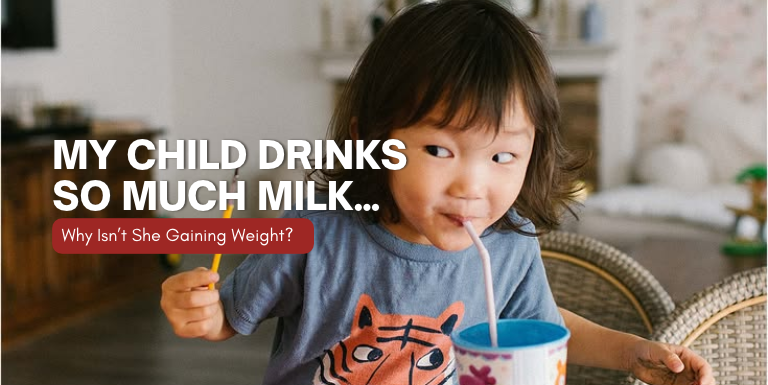
My Child Drinks So Much Milk… Why Isn’t She Gaining Weight?
Milk is an important part of a young child’s diet, providing nutrients such as protein, calcium and other essential vitamins and minerals. So, it may seem logical to assume that giving a child more milk will help them gain weight. But sometimes, more milk does not necessarily mean better weight gain. In fact, drinking too much milk can fill a small tummy and leave less room for nutritious meals. In this article, Dr Brenda Phang Joo Yee from Goroneko Kids Wellness explains how milk can affect your child’s appetite, how much milk they may need and what parents can do to encourage a more balanced diet. Not always. Milk is nutritious and can be an important part of a young child’s diet. However, children have relatively small stomachs, so filling up on milk can leave them with less appetite for other foods. When a child regularly drinks large amounts of milk, they may feel full before mealtimes or simply prefer milk because it is easier to consume than a full meal. This can create a cycle where the child drinks more milk, eats less food and continues to rely heavily on milk for their daily nutrition. The goal isn't to remove milk from your child's diet. Instead, milk should complement meals rather than replace them. The amount of milk a child needs can vary depending on their age, overall diet and other sources of dairy. As a general guide: Children in this age group may have around 2–3 cups of milk per day, equivalent to approximately 16–24 oz. Children may have around 2 cups of milk per day, or approximately 16 oz. However, these amounts are not a one-size-fits-all rule. Your child's individual needs depend on their overall nutritional intake and whether they are getting dairy from other foods. The bigger picture is to make sure that milk is part of a varied diet rather than taking the place of meals. Instead of asking only, "How much milk does my child drink?", parents can also ask: Your child may be having enough—or possibly too much—milk to affect their appetite if they regularly: Refuse or pick at meals Ask for milk instead of food Drink milk shortly before mealtimes Sip milk throughout the day These behaviours may suggest that milk is crowding out other foods in your child's diet. For example, if your child drinks a large cup of milk shortly before lunch, they may simply not feel hungry enough to eat the meal you've prepared. If you think milk may be affecting your child's appetite, small changes to their routine may help. Try offering your child's main meal before giving milk. This gives them an opportunity to eat a variety of foods while they are hungry, rather than filling up on milk first. Instead of allowing your child to sip milk whenever they ask for it, consider establishing regular milk times. A predictable routine can help create clearer boundaries between meals, snacks and milk. If your child regularly drinks a large amount of milk shortly before mealtimes, they may have less appetite for food. Giving them some space between milk and meals can help make room for other foods. Milk shouldn't be the only source of nutrition in your child's diet. Try to offer a variety of foods, including: Iron-rich foods Protein Healthy fats Fruits Vegetables Other nutritious foods appropriate for your child's age A varied diet helps children obtain different nutrients that milk alone cannot provide. While excessive milk intake can affect appetite, not every child who is struggling to gain weight is simply drinking too much milk. Poor weight gain can have many possible causes, so it is important to look at your child's growth pattern, eating habits and overall health rather than focusing on milk alone. Speak to your doctor if your child has: Growth that is dropping across growth centiles Persistent poor appetite Persistent vomiting or diarrhoea Unusual fatigue Other concerning symptoms A healthcare professional can assess your child's growth and determine whether further evaluation is needed. Milk is nutritious and can be an important part of your child's diet. The goal isn't to eliminate milk, but to make sure milk doesn't replace meals. If your child drinks a lot of milk but struggles with meals, consider looking at when and how often milk is offered. Ultimately, it's about finding the right balance: 🥛 Milk for nutrition. If you're concerned about your child's weight gain or eating habits, speak to a healthcare professional for personalised advice. Dr Brenda Phang Joo Yee is a Paediatric Medical Officer at Goroneko Kids Wellness. She provides paediatric care and guidance to parents on children's health, nutrition, growth and development. Disclaimer: This article is intended for general educational purposes only and does not replace professional medical advice. If you are concerned about your child's growth, nutrition or overall health, speak to a qualified healthcare professional for appropriate assessment and advice.More Milk = More Weight?
How Much Milk Does a Child Need?
Children Aged 1–2 Years
Children Aged 2–5 Years
Is Milk Getting in the Way of Meals?
"Is milk getting in the way of meals?"
What Can Parents Do?
1. Offer Meals First
2. Set Milk Times
3. Avoid Large Amounts of Milk Before Meals
4. Offer a Varied Diet
Don't Blame Milk for Everything
The Bottom Line
🍽️ Meals for variety.
💛 A balanced diet for healthy growth.About Dr Brenda Phang Joo Yee