
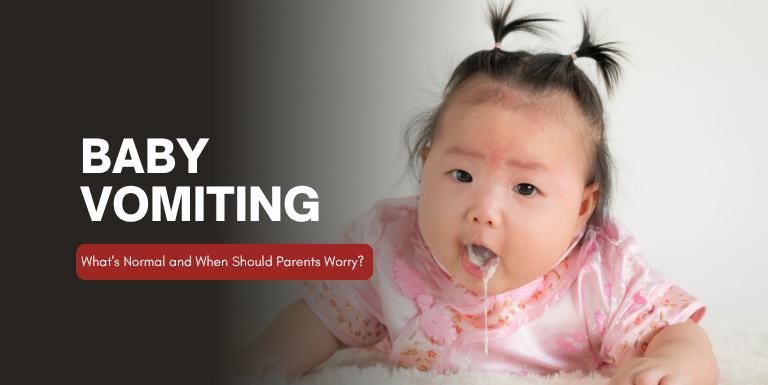
Baby Vomiting: What's Normal and When Should Parents Worry?
Vomiting is common in babies, especially during the early months. While occasional spit-up after feeding is usually normal, frequent or forceful vomiting may sometimes indicate an underlying condition that requires medical attention.
Understanding the difference between normal spit-up and concerning vomiting can help parents recognise when it may be time to seek medical advice.
In this article, Dr Pavin Kaur, Consultant Paediatric Surgeon, shares what parents should know about vomiting in babies, including the warning signs to look out for and when to seek medical attention.
Understanding Vomiting in Babies
Babies have small stomachs and developing digestive systems. Sometimes, they may drink more milk than their stomach can comfortably hold, causing a small amount of milk to come back up after feeding.
Occasional spit-up is generally considered normal, especially if your baby is feeding well, gaining weight and appears comfortable.
However, parents should pay attention to changes in the frequency, force and pattern of vomiting.
Signs Parents Should Watch For
Not all vomiting is the same. Certain signs may indicate that your baby needs further medical assessment.
These include:
- Forceful (projectile) vomiting, especially during the first few months of life
- Vomiting after almost every feed
- Poor weight gain or weight loss
- Appears distressed, refuses feeds or cries excessively after feeding
- Your baby appears hungry again immediately after vomiting
- Fewer wet diapers than usual, especially if accompanied by signs of dehydration such as:
- Dry mouth
- Sunken eyes
- Unusual sleepiness
- A swollen or tense abdomen
- Visible wave-like movements across the tummy before vomiting
- Greenish (bilious) vomiting or blood-stained vomit, which requires urgent medical assessment
Keeping track of when the vomiting occurs and any accompanying symptoms can help healthcare professionals better assess your baby's condition.
Could It Be Pyloric Stenosis?
One possible cause of frequent and forceful vomiting in babies is pyloric stenosis.
Pyloric stenosis occurs when the pylorus muscle, located between the stomach and small intestine, becomes thicker than usual. This narrows the passage between the stomach and intestine, preventing milk from passing through the digestive system properly.
As a result, milk is vomited back up instead of moving into the intestine.
This condition most commonly affects babies between 2 and 8 weeks of age.
Babies with pyloric stenosis may experience:
- Repeated forceful, non-greenish (non-bilious) projectile vomiting
- Wanting to feed again soon after vomiting
- Poor weight gain or weight loss
- Signs of dehydration if vomiting continues
If you notice these symptoms, seek medical attention promptly. Early diagnosis and treatment can help prevent complications.
Constipation Is Another Sign to Watch
Changes in your baby's bowel movements may also require attention.
While bowel habits can vary between babies, parents should monitor their baby if they:
- Have not passed stool for several days
- Strain or cry when trying to pass stool
- Have a swollen or firm tummy
- Appear uncomfortable or unsettled
Significant changes in your baby's usual bowel pattern, especially when accompanied by discomfort or vomiting, should be discussed with a healthcare professional.
When Should You See a Doctor?
Parents should seek medical attention if their baby:
- Has frequent or forceful vomiting
- Is not gaining weight or is losing weight
- Refuses feeds or cries excessively after feeding
- Has fewer wet diapers or shows signs of dehydration, such as a dry mouth, sunken eyes or unusual sleepiness
- Has a swollen or tense abdomen
- Has greenish (bilious) vomiting
- Has blood-stained vomit
It is also important to observe your baby's overall behaviour. Changes in feeding, activity levels and responsiveness may provide important clues about their condition.
Greenish vomiting and blood-stained vomit require urgent medical assessment and should not be ignored.
Early Assessment Can Make a Difference
Many conditions that cause vomiting in babies can be identified and managed with appropriate medical care.
Paying attention to changes in your baby's feeding, digestion and behaviour can help you recognise when something may require further assessment.
If you are concerned about your baby's vomiting or notice unusual symptoms, speak to a healthcare professional for proper evaluation and guidance.